U.S. Power Boom Triggers Global Gas Turbine Shortage
Tsvetana Paraskova
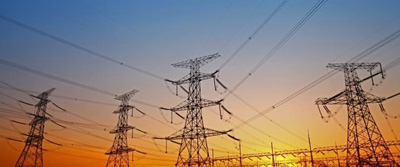 The hyperscaler-driven surge in U.S. power demand is creating ripple effects in the global supply chain, with gas turbines becoming the most critical bottleneck to rolling out flexible baseload capacity to support accelerated load growth. The hyperscaler-driven surge in U.S. power demand is creating ripple effects in the global supply chain, with gas turbines becoming the most critical bottleneck to rolling out flexible baseload capacity to support accelerated load growth.
Gas turbine makers report soaring backlogs and delivery times years after order placement, while analysts say the bottlenecks in power plant equipment effectively delay the gas-fired power capacity that is needed now.
The U.S. sees unprecedented power demand growth—AI infrastructure, data centers, and advanced manufacturing are driving the first meaningful growth in U.S. power consumption since the 1990s. The growth is set to average about 2% each year over the next decade, making new electricity generation capacity critical to supporting the advance in AI and the onshoring of manufacturing.
“Natural gas will benefit significantly from the rising electricity demand and the requirement for 24/7 uninterrupted supply. It is most flexible among all energy sources and an abundant domestic resource,” Goldman Sachs said in a report last year.
Helped by the favorable pro-fossil fuel policies of the Trump Administration, gas will be the winner in the U.S. power demand surge.
Yet, to be a winner, gas-fired power plants need to be up and running in time to meet the soaring demand. Without key components such as gas turbines, the near-term needs will be met by other sources.
The lead time for new combined-cycle gas power plants has jumped to five years in 2025 from three and a half years back in 2023, with costs soaring by 49%, according to BloombergNEF data.
“The supply chain crisis in gas turbine manufacturing represents one of the most acute bottlenecks in meeting data centre demand,” analysts at Wood Mackenzie said last summer.
Turbine production falls dramatically short of the committed capacity by 14 major U.S. utilities, according to the energy consultancy.
Global Energy Monitor’s (GEM) Global Oil and Gas Plant Tracker shows that as of January 2026, the U.S. gas power capacity under construction topped 29 gigawatts (GW)—more than double in a year.
Capacity in the pre-construction phase, that is, considered and on the track to permitting, has soared in one year more than fourfold to over 159 GW, the tracker showed.
Many of these may not see start dates for years, not because of troubles with permitting, but because of a lack of gas turbines available from the manufacturers.
“We moved into '25 with 46 gigawatts on contract. We ended the year with 83 gigawatts. We'll end this year with at least 100 gigawatts,” GE Vernova’s CEO Scott Strazik said on the 2025 earnings call last week.
The longer equipment cycles of the gas-fired power plants mean that “we will not begin delivering on the majority of the higher-margin orders placed in '24 and '25 until '27 and beyond,” Strazik added.
Siemens Energy said on a November earnings call that its 2025 order intake “has been substantially supported by the electricity needs for data centers.”
“Especially in the U.S., this has driven unprecedented demand for gas turbines and grid infrastructure and translated into record high order volumes for Siemens Energy in fiscal year 2025. We almost doubled the number of gas turbines sold globally from 100 units in 2024 to 194 units in 2025,” President and CEO Christian Bruch said.
Siemens Energy has just committed a $1-billion investment to scale up its U.S. manufacturing of grid and gas turbine equipment to support the strong growth of the U.S. electricity market.
As key turbine manufacturers turn to the red-hot American market, equipment bottlenecks in other countries could become even more severe and prompt developers to seek other energy sources to meet power demand.
In a way, the gas turbine shortage could accelerate the rollout of renewable energy sources in parts of Asia and in Europe, Reuters global energy transition columnist Gavin Maguire argues.
Europe and Asia need to rely on imported gas, so uncertainty about prices and concerns about energy security, especially when combined with gas turbine shortages, could prompt these markets to lean on non-gas solutions.
In the U.S., an abundant supply of cheaper gas and soaring power demand make a great case for expansion of gas-powered generation capacity, if the critical bottleneck in the supply chain is eliminated.
By Tsvetana Paraskova for Oilprice.com

Tsvetana is a writer for the U.S.-based Divergente LLC consulting firm with over a decade of experience writing for news outlets such as iNVEZZ and SeeNews.
oilprice.com
|