
Send this article to a friend:
December
05
2025
|
Send this article to a friend: December |
DEI Liberates Blue-Collar America!
I follow up now because Zero Hedge dropped a bombshell, reporting that America desperately needs half a million highly skilled workers just to keep basic national functions running. For too long, America has constructed a strange mythology around the college degree, DEI bureaucracy, and credentialism. To hell with apprenticeships and on-the-job training! Let colleges give you the theory behind your work, and then you can be “desk-ready” when a company hires you. Parents spent decades insisting that the only respectable career path was a vague “office job” in a cubicle, conveniently omitting the lifetime of diversity seminars that came with it. Meanwhile, the people who actually keep civilization functioning—electricians, welders, linemen, machinists, mechanics, heavy equipment operators, HVAC technicians, and plant workers—were quietly retiring, with no one to replace them. DEI didn’t notice because the entire DEI ecosystem produces exactly one thing: more DEI. It produces consultants, coordinators, assistant vice provosts for feelings management, and armies of people whose entire skill set consists of talking about work rather than doing it. DEI was never designed to produce someone capable of fixing a turbine, rebuilding a transformer, installing an HVAC system, or keeping a refinery from blowing sky-high. That’s how we reached today’s crisis. The shortage of tradesmen in the U.S. is now in the hundreds of thousands, with manufacturing alone predicted to face an underemployment gap of over 2 million workers by 2030 unless current trends change. This is a structural catastrophe years in the making, directly resulting from an elite (and, to be fair, upper middle class, as well) consensus that treated blue-collar labor as an embarrassing secret. The consequences of this attitude are now clearly visible. Meanwhile, wages in the trades have soared. Companies are fighting over electricians like NFL teams fight over star quarterbacks. Data centers—those monstrous buildings that power AI—are scrambling to find anyone who understands cooling systems. Construction firms are begging for pipefitters and welders. The trades have gone from being the quiet backbone of America to being the single hottest labor market in the country. Mike Rowe Was RightIf this sounds familiar, it’s because Mike Rowe said all of this a decade ago. He claimed we were pushing kids into pointless degrees, bankrupting them before age 22, and starving the real economy of talent. He warned about the skilled-labor shortage long before the think tanks bothered to run the numbers. And for his trouble, he was dismissed as a crank by the very literati that now publish hand-wringing op-eds about “the shocking decline of vocational interest.” Rowe wasn’t anti-education. He was anti-stupidity. And sending millions of kids into debt for soft skills, grievance studies, or corporate HR ladders qualifies as stupidity of the highest order. Not Just Recession Proof!There’s another truth we need to say plainly, even though it makes the professional class uncomfortable: the trades are DEI-proof. Identity categories don’t judge a welder. The steel either holds or it fails. An electrician either wires the building correctly or the building burns. A machinist either hits the tolerances or the part doesn’t fit. In the trades, nature enforces the standards. Physics performs the evaluation. Reality conducts the performance review. No committee can issue a variance on gravity. No consultant can waive the electrical code. No HR department can “reimagine” hydraulic pressure. When the world runs on objective outcomes, all the ideological baggage gets thrown out the window. Competence wins. Accountability wins. Reality wins. And the trades, unlike the credential mills, are built entirely on those foundations. A Brand New DayThat’s why today’s teenagers should rethink their futures. If I were 18 again—with the same allergy to debt I have now—I’d run toward the trades. The math is overwhelming. A kid who learns a skilled trade starts earning in his late teens or early twenties, builds capital early, and avoids the soul-destroying burden of student loans. By the time his college friends are moving back home to figure out “what they want to do with their lives,” he’s got five years of experience and real coin in his bank account. On top of that, the work can’t be outsourced overseas or automated away. AI can write poems about electricity, but it can’t install a single outlet. Robots don’t climb ladders, crawl through attics, fix industrial machinery, or weld bridges. The real world still runs on hands, tools, skill, and sweat. And most importantly, trade work offers what college rarely delivers: pride. Heck, a builder who helped rebuild Notre Dame Cathedral in Paris was given the rare honor of marrying his fiancée there. Quel honneur! When you finish any job, you see the result. A building stands because of you. A power system runs because of you. A factory stays online because you kept it alive. Compare that to another day of curating Slack threads. Parents and grandparents need to stop repeating the mantra that every kid needs a degree. It’s nonsense. What every kid needs is a skill. College gives you debt; a trade gives you a life. Wrap UpDEI sold us the fantasy that America’s problem was “representation.” But the real crisis is much simpler: not enough people know how to do essential work. We don’t have a representation shortage—we have a competence shortage. And no amount of seminars or slogans will fix it. The good news is that the pendulum is swinging back. America is finally recognizing the worth of skilled labor. Earning a significant income early in life is superior to the endless pursuit of academic degrees. So once again, I implore you: get your kids into trade schools and watch them blossom. The cubicle farm will soon be a data center anyway.
|
Send this article to a friend:
 |
 |
 |
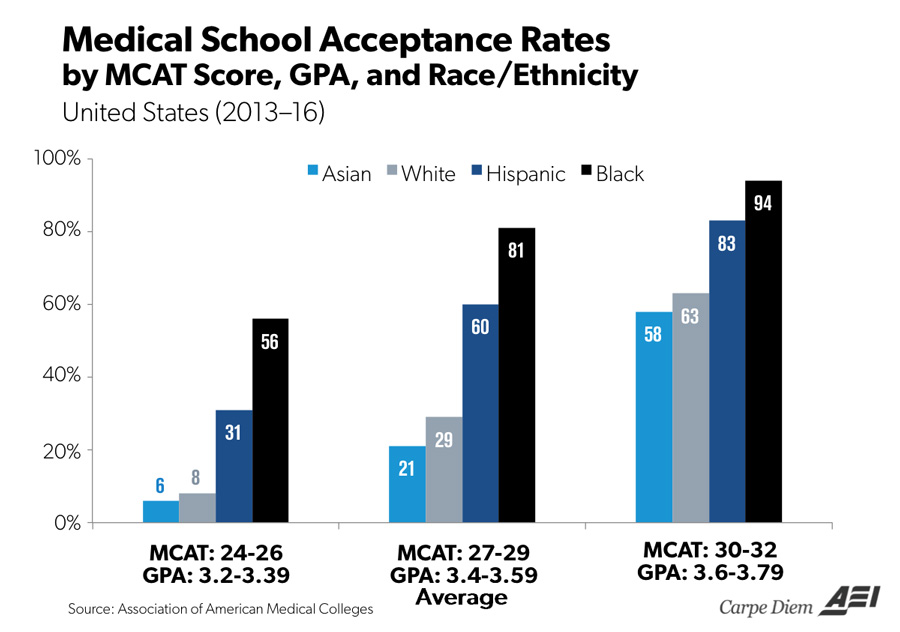 Two months ago, I made the case that DEI was—ironically—the best thing that ever happened to white guys. The week after, I elaborated after a subscriber wrote in with a genuine concern.